Commercial demolition across North Carolina
Commercial demolition clears the way for redevelopment. In North Carolina, that might mean removing a dated strip center in Charlotte for mixed-use apartments, taking down a closed restaurant in Raleigh for a new tenant, clearing an old bank branch in Greensboro, or removing a hotel damaged by a coastal storm.
Alpha Demolish demolishes commercial buildings of all sizes across the state. Commercial projects carry more regulation, more stakeholders and more risk than residential work: full asbestos compliance, universal and hazardous waste, traffic and pedestrian control, adjacent tenants, and owners and lenders who need the project to finish on time. We plan for all of it before the first machine arrives.
This page explains what our commercial demolition service includes, the North Carolina compliance that applies, how soft strip and salvage work, how we work in busy areas, what affects the cost and what documents speed up your project.
Commercial buildings we demolish
We demolish commercial buildings of every type across North Carolina, whole or in part:
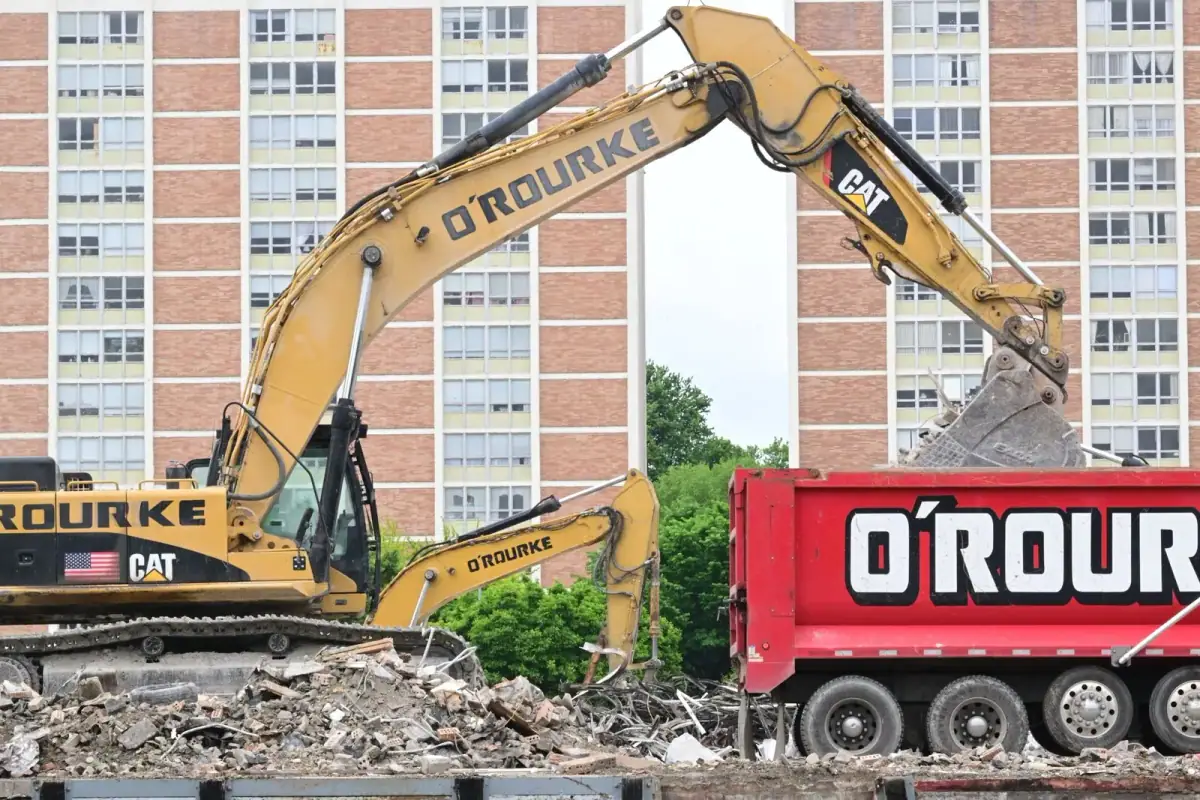
Office buildings
Low- and mid-rise offices, office parks and medical office buildings.
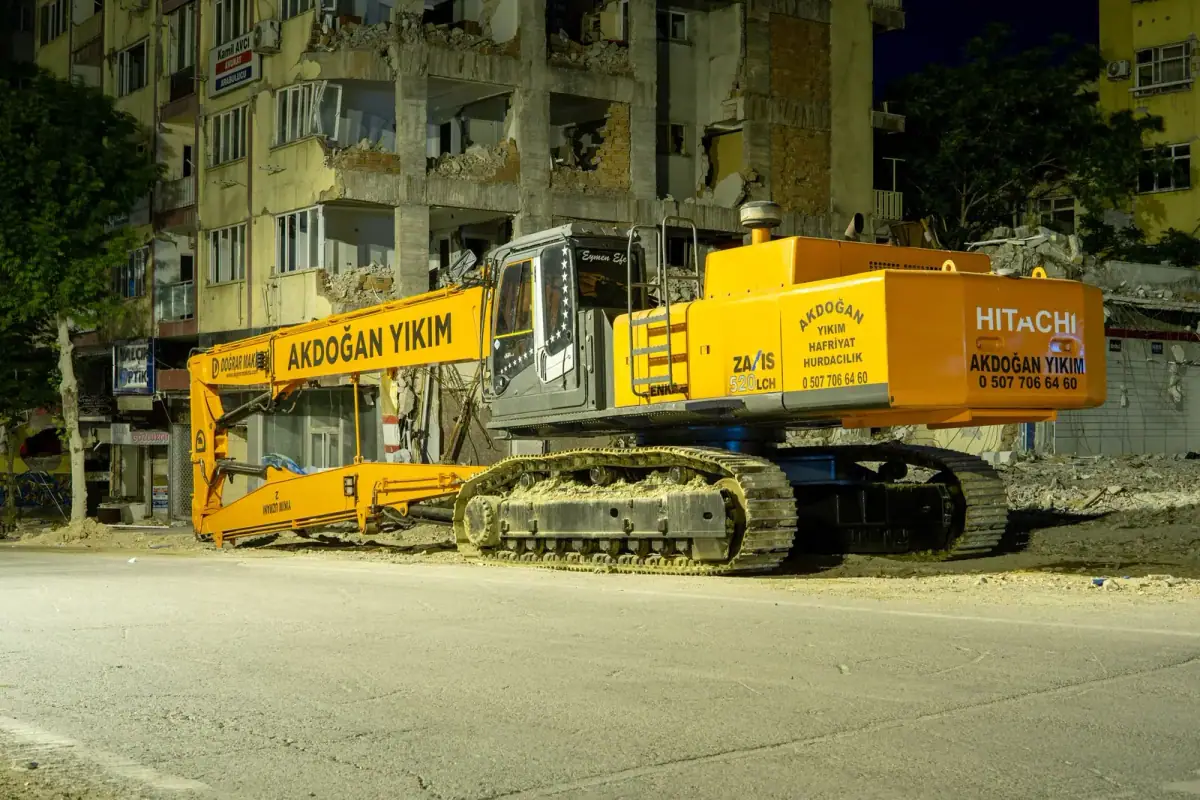
Retail and shopping centers
Strip centers, big-box stores and anchor spaces, including partial demolition while other tenants stay open.

Restaurants
Freestanding restaurants and fast-food buildings, with grease traps and kitchen hoods handled properly.
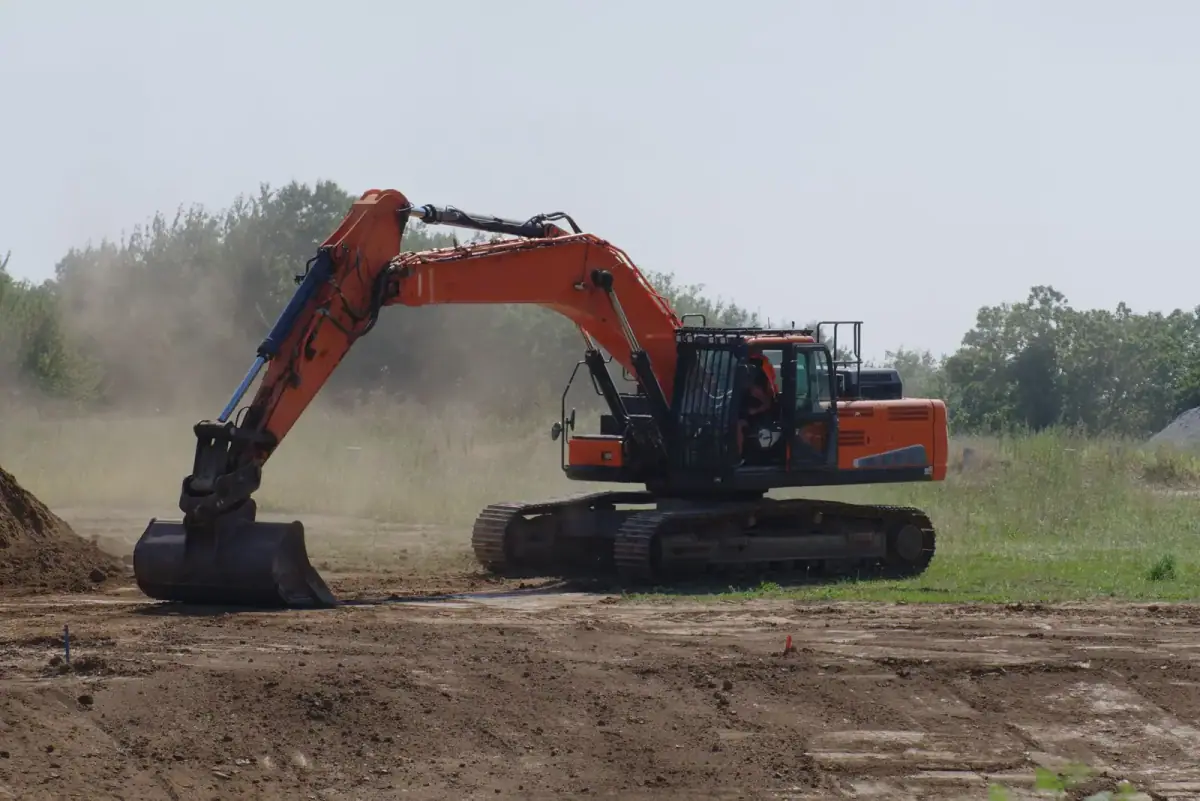
Gas stations and stores
Canopies, buildings and pump islands, coordinated with underground storage tank closure.
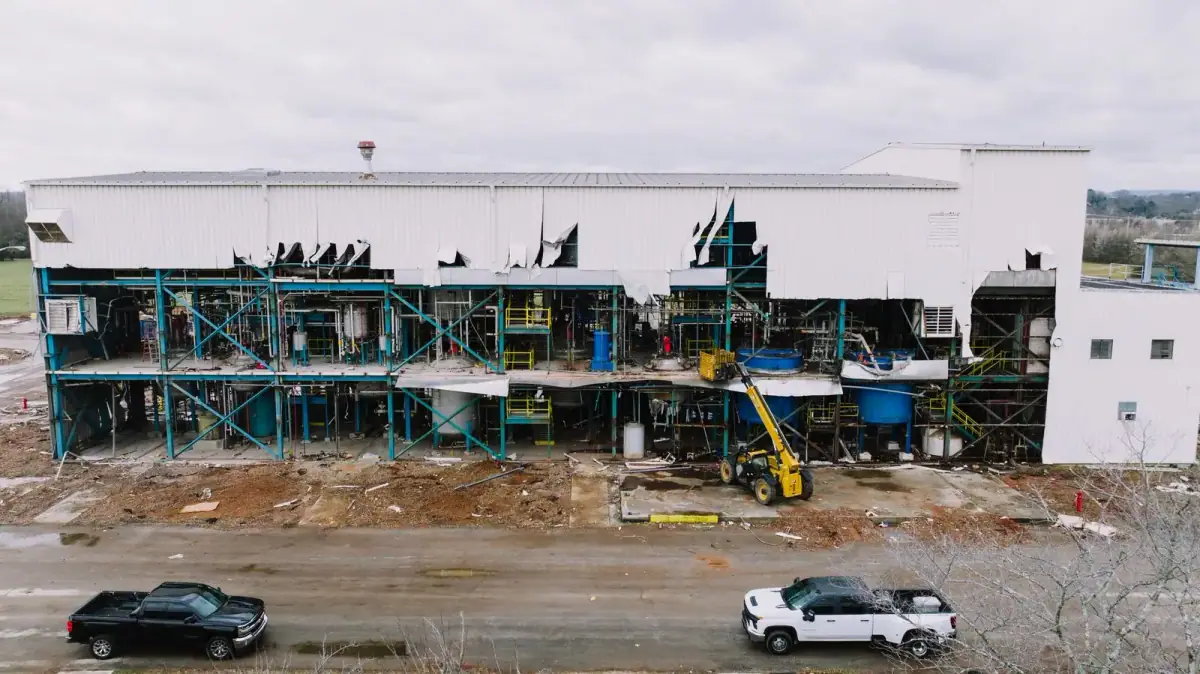
Hotels and motels
Multi-story hospitality buildings, often with large amounts of furnishings and finishes to remove first.
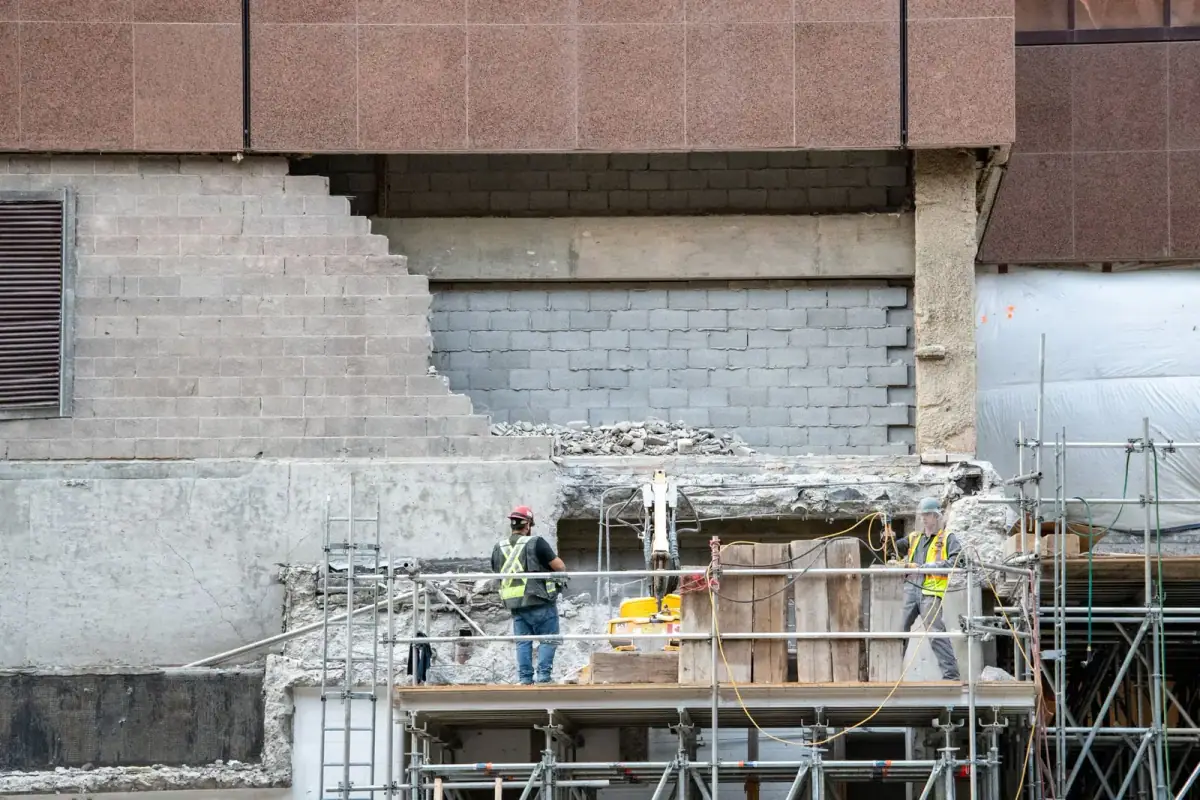
Banks, schools and churches
Buildings with vaults, gyms, auditoriums and large-span roofs that need specific methods.
What’s included in our commercial demolition service
Commercial demolition is a managed project from survey to close-out. Every Alpha Demolish commercial demolition in North Carolina includes:
- 01Pre-demolition engineering survey.
Structural review, utilities, hazards and adjacent structures, as required before commercial demolition.
- 02Hazardous materials program.
Asbestos, universal waste, refrigerants, PCBs and tanks handled before demolition.
- 03Permits and notifications.
Demolition, right-of-way and NESHAP notifications filed and tracked.
- 04Utility abandonment.
Services terminated and capped with each utility.
- 05Soft strip and salvage.
Interior materials removed and saleable items recovered.
- 06Structural demolition.
Excavators, high-reach machines and specialist attachments.
- 07Foundation and paving removal.
Slabs, footings, parking lots and site concrete as scoped.
- 08Recycling and reporting.
Concrete, steel and other materials diverted, with tonnage reports.
- 09Site restoration and close-out.
Backfill, compaction, rough grading, erosion control and a documentation package.
Our commercial demolition process, step by step
Most of the time on a commercial demolition is spent before any machine touches the building. We start surveys and utility requests early to protect the schedule.
Week 1
Assessment and bid
Site walk, review of drawings and hazardous materials reports, and a detailed scope and price.
Weeks 1–6
Pre-construction
Permits, notifications, utility abandonment, traffic plans and schedule.
Weeks
Hazardous materials removal
Asbestos abatement, universal waste and refrigerant recovery.
Days–weeks
Soft strip
Interior materials and salvage removed before structural work.
Days–weeks
Structural demolition
The building is taken down in a planned sequence with dust and traffic control.
Handover
Site restoration and close-out
Foundations removed, site graded, and documentation delivered.
READY TO CLEAR THE SITE?
Tell us what needs to come down.
Send a few project details and our team will get back to you with the next steps.
Soft strip, salvage and working in busy areas
Soft strip and salvage
Before the structure comes down, we strip out what should not go into the debris, which makes structural demolition cleaner and recycling far higher.
- Furniture, fixtures and equipment removed
- Ceiling tiles, carpet, drywall and cabinetry stripped
- Commercial kitchen equipment recovered
- Rooftop HVAC units and generators salvaged
- Copper, wiring and store fixtures reclaimed
- Architectural features saved on request
- Salvage value returned to the owner
- Cleaner debris stream for recycling
Working in busy commercial areas
Commercial sites sit on busy streets and next to occupied buildings, so protection and traffic control are planned first.
- Traffic control plans, flaggers and lane closures
- Covered walkways or signed sidewalk detours
- Protection for neighboring buildings and tenants
- Dust suppression with water and misting
- Noise and vibration management
- Night or weekend work where required
- Street sweeping and truck wash-down at the exit
- NC state OSHA demolition standards followed
What affects commercial demolition cost
Commercial demolition is priced from a detailed scope after a site walk and review of drawings and reports. The biggest cost drivers are:
| Cost factor | Why it matters |
|---|---|
| Building size and construction | Steel, concrete and masonry buildings differ in method and hauling. |
| Hazardous materials | Asbestos, PCBs and tanks can be a large share of the budget. |
| Site constraints | Busy streets, adjacent tenants and limited staging slow the work. |
| Foundations and paving | Removing parking lots, slabs and deep foundations adds scope. |
| Schedule | Night work and accelerated schedules add cost. |
| Salvage and recycling | Steel, copper and equipment salvage can offset costs. |
| Traffic control | Lane and sidewalk closures add permit and labor cost. |
Typical commercial demolition timeline
Most of the time on a commercial demolition is spent before any machine touches the building. Starting surveys and utility requests early is the best way to shorten the schedule.
| Stage | Typical duration |
|---|---|
| Asbestos survey and lab results | 1–2 weeks |
| NESHAP notification period | At least 10 working days |
| Asbestos abatement | Days to several weeks, by quantity |
| Utility abandonment | 2–6 weeks, depending on the utilities |
| Soft strip and salvage | Days to weeks |
| Structural demolition | Days for single-story; weeks for large or multi-story |
| Foundation removal and site restoration | Days to weeks |
Full, partial or interior commercial demolition
We scope the work to the project, from taking a whole building down to opening up a space while the business next door stays open.
Full building demolition
The entire structure, foundations and site paving removed and the site restored, ready for redevelopment.
Partial center demolition
Part of a shopping center or building removed while other tenants stay open, with shared walls, utilities and access protected.
Interior soft strip
Interior gutted back to structure for a tenant fit-out or renovation, without touching the shell.
On multi-tenant properties we separate the demolition area, protect shared walls and utilities, and plan access, parking and hours around the businesses that stay open.
North Carolina compliance for commercial demolition
Commercial demolition carries a full compliance program that we manage from the start. The key requirements in North Carolina are:
- Asbestos inspection and NESHAP notification. Every commercial building must be inspected by an NC-accredited inspector. Regulated asbestos-containing material is removed first, and notification is filed at least 10 working days before demolition — with the NC Health Hazards Control Unit, or the local air quality agency in Mecklenburg, Forsyth and Buncombe counties.
- Universal and hazardous waste. Fluorescent lamps, mercury thermostats and switches, batteries, older PCB-containing light ballasts and exit signs are removed and handled properly before demolition.
- Refrigerants. Rooftop units, walk-in coolers and ice machines contain refrigerants that federal rules require to be recovered by certified technicians.
- Underground storage tanks. Gas stations and some older buildings have USTs regulated by NC DEQ. Tank closure follows state requirements, including sampling and reporting.
- Former dry cleaners. Dry-cleaning sites can have solvent contamination, where North Carolina’s Dry-Cleaning Solvent Cleanup Act program may apply.
- Permits and worker safety. Local demolition and right-of-way permits, plus a pre-demolition engineering survey required under the NC Department of Labor’s state OSHA demolition standards.
Surveys, abatement, notifications, tank closure, permits and traffic control are all part of our commercial demolition service. You approve the plan; we manage the regulators, utilities and paperwork.
Documents that speed up a commercial demolition
The more we have up front, the faster and tighter your bid and schedule. Helpful items include:
PLANNING A PROJECT?
Let’s scope your commercial demolition
Send your building drawings, environmental reports and target dates and a project manager will prepare a detailed scope, schedule and price — no commitment needed.
Recycling and diversion reporting
Commercial buildings yield large volumes of recyclable material, and soft strip lets us divert far more of it:
- Concrete and masonry. Structures, slabs and parking lots are crushed into recycled aggregate and base.
- Structural steel and metals. Steel framing, rebar, copper and equipment metal go to scrap recyclers.
- Salvaged equipment and fixtures. Kitchen equipment, HVAC units, generators and store fixtures are sold or reused.
- Diversion reporting. We document tonnage recycled and disposed for LEED and other sustainability programs.
The recycling and salvage value is reflected in your budget, and the diversion reports are part of your close-out package.