When explosive demolition makes sense
Explosive demolition, often called implosion, uses small, precisely placed charges to remove key supports so a structure falls in a controlled direction or into its own footprint. The collapse lasts seconds. The planning, preparation and safety work behind it takes weeks.
It is the right choice for a small number of projects: very tall stacks and towers, massive reinforced concrete structures, and buildings where putting workers and machines on or beside the structure would be more dangerous than a controlled blast. Alpha Demolish plans and prepares these projects in partnership with licensed blasting specialists, and handles the demolition, debris processing and site clearance before and after the blast.
This page explains what our explosive demolition service includes, which structures suit it, the permits and regulation involved, how we protect the public, how it compares with mechanical demolition and how a blast day unfolds.
Structures suited to explosive demolition
Explosive demolition suits a specific set of tall or massive structures. The most common are:
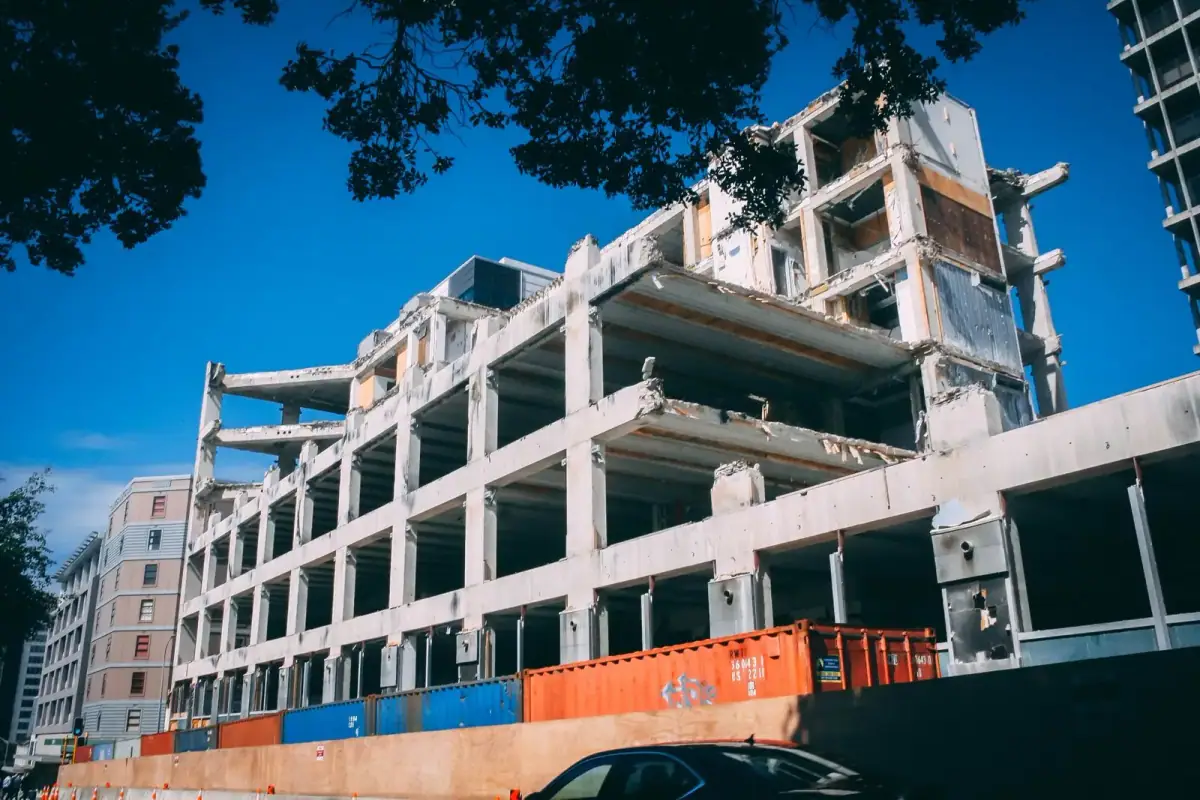
Smokestacks and chimneys
Tall industrial and power plant stacks, felled in a planned direction.
Cooling and water towers
Large concrete and steel towers that are hard to dismantle safely by hand.
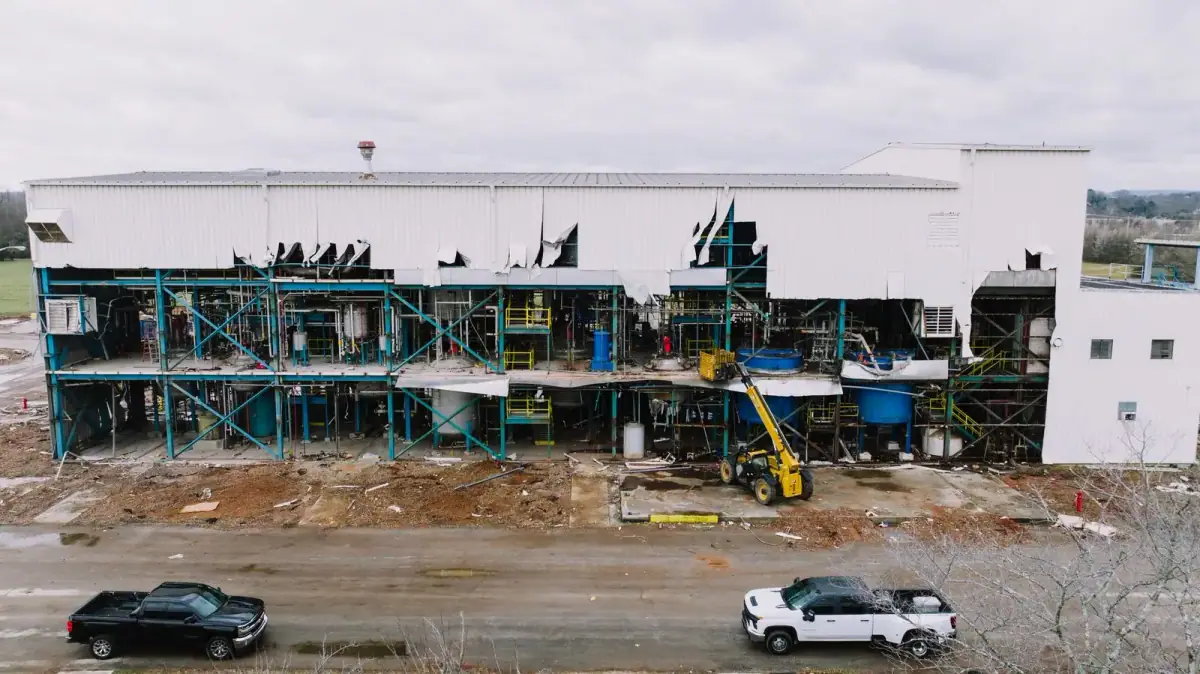
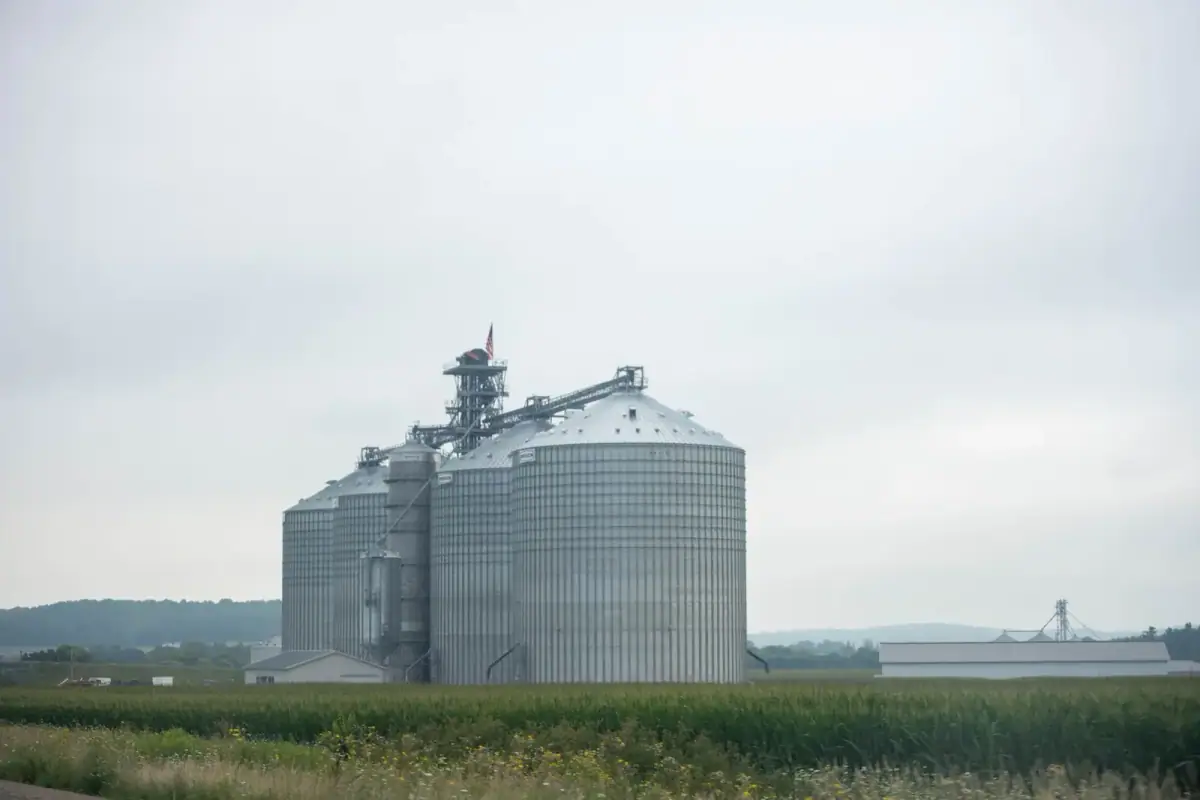
Large concrete structures
Heavily reinforced frames, silos and industrial structures.
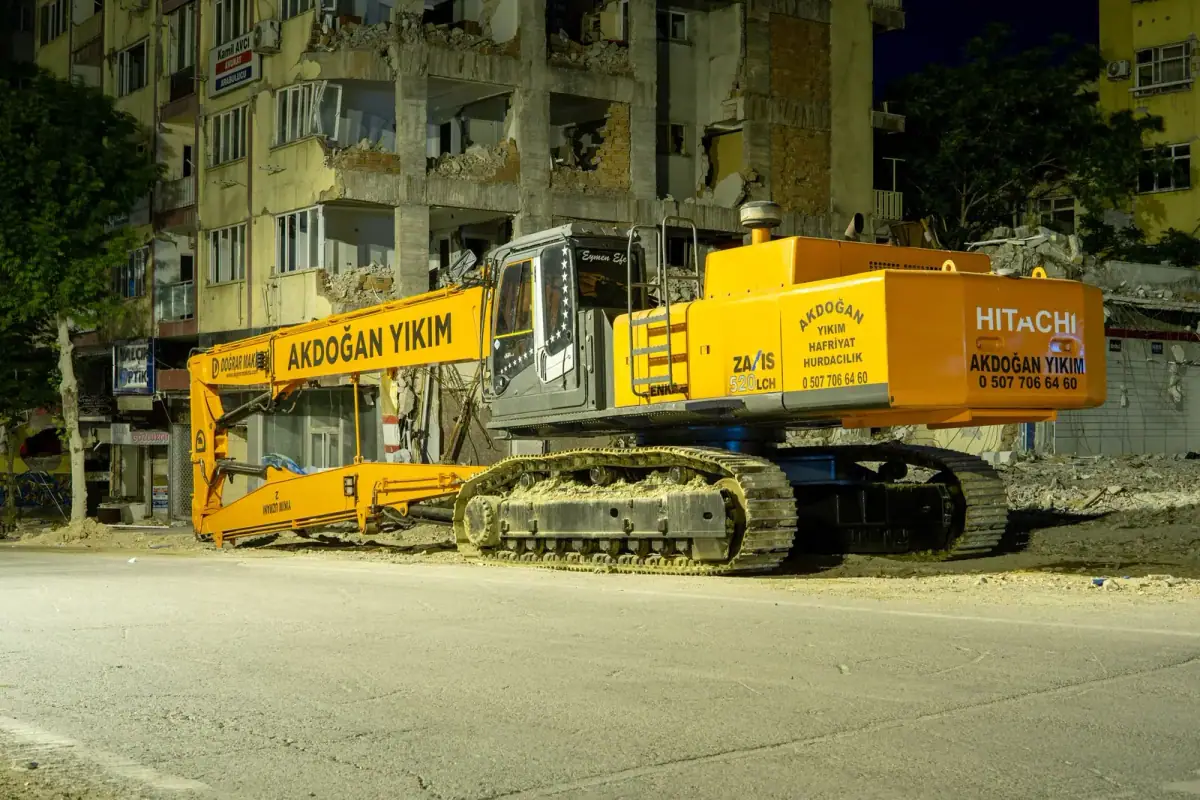
High-rise buildings
On sites with enough space for a proper exclusion zone.
Unsafe structures
Damaged buildings where putting workers inside would be too risky.
What’s included in our explosive demolition service
Explosive demolition is a fully managed project — the blast itself is a few seconds inside weeks of work. Every Alpha Demolish implosion project in North Carolina includes:
- 01Feasibility and method comparison.
An honest comparison of explosive versus mechanical demolition for cost, schedule, risk and community impact.
- 02Engineering and blast design.
Structural analysis and a designed fall direction, charge locations and firing sequence, by licensed specialists.
- 03Permits and licensing.
Federal explosives licensing, local fire-code blasting permits, demolition permit and NESHAP notification.
- 04Hazardous materials removal.
All regulated asbestos-containing material is removed completely before any charges are placed.
- 05Pre-weakening.
Non-structural walls removed and selected structural elements cut to control the collapse.
- 06Charge placement and protection.
Charges loaded into drilled holes, and columns wrapped to contain debris.
- 07Exclusion zone and notification.
Neighbors, businesses and authorities notified, closures arranged and the zone secured.
- 08Blast, inspection and clean-up.
The blast, a safety inspection for undetonated charges, then debris processing, recycling and site clearance.
Preparing a structure for implosion, step by step
The weeks before a blast are where the safety and success of the project are decided. The sequence is:
Weeks out
Engineering and blast design
The structure is analyzed and the fall direction, charge locations and firing sequence are designed.
Weeks out
Hazardous materials removal
Asbestos and other hazardous materials are removed completely before any charges are placed.
Days–weeks
Pre-weakening
Non-structural walls are removed and selected structural elements are cut to control the collapse.
Final days
Charge placement and protection
Charges are loaded into drilled holes, and columns are wrapped to contain debris.
Blast day
Exclusion zone and notification
Neighbors, businesses and authorities are notified, and the exclusion zone is secured.
Blast day+
Blast, inspection and processing
The charges are fired, the site is inspected and declared safe, then debris is processed and recycled.
READY TO CLEAR THE SITE?
Tell us what needs to come down.
Send a few project details and our team will get back to you with the next steps.
Public safety and blast day
Protecting neighbors and the public
A controlled blast is safe only because of the monitoring and planning around it. We plan for the whole community.
- Pre-blast condition surveys of nearby buildings
- Vibration and air overpressure monitoring
- Dust modeling and clean-up plans
- Public notification and communication
- Traffic and crowd control on the day
- Contingency plans for incomplete collapse
- Exclusion zones sized by the blast engineers
- General liability and specialist blasting insurance
What happens on blast day
Blast day follows a strict, rehearsed sequence controlled by the licensed blaster and the authorities.
- Final sweep of the structure and exclusion zone
- Roads, sidewalks and nearby areas closed
- Audible warning signals in a set sequence
- Charges fired and the structure falls
- Blaster inspects for undetonated charges
- All-clear given before anyone returns
- Roads reopened and debris processing begins
- Site secured throughout
Explosive vs. mechanical demolition cost
For very tall or massive structures, implosion can be the better value; for most buildings, mechanical demolition costs less. We compare both honestly for your project.
| Consideration | Explosive | Mechanical |
|---|---|---|
| Time on the structure | Weeks of prep, seconds to collapse | Days to months of continuous work |
| Worker exposure at height | Lower | Higher for tall structures |
| Community impact | One intense event | Longer period of noise and dust |
| Site requirements | Large exclusion zone | Works on tighter sites |
| Best value | Very tall or massive structures | Most buildings |
How long implosion preparation takes
The collapse takes seconds, but preparation typically takes several weeks, and clean-up afterward is the same as any demolition. A typical schedule runs like this:
| Stage | Typical duration |
|---|---|
| Feasibility and engineering | 2–4 weeks |
| Permits and explosives licensing | Weeks, in parallel |
| Asbestos abatement | Days to several weeks |
| Pre-weakening and charge placement | 1–2 weeks |
| Blast day | A single, planned event |
| Debris processing and site clearance | Days to weeks |
Explosive or mechanical? Setting expectations
Implosion is dramatic, but it is not always the right answer. We help you set realistic expectations and choose the method that truly fits.
When implosion fits
Very tall stacks and towers, massive reinforced structures, and buildings where working at height would be more dangerous than a controlled blast.
When mechanical fits
Most buildings, especially on tight urban sites without room for an exclusion zone, come down faster and cheaper with high-reach mechanical demolition.
Honest comparison
We compare both options for cost, schedule, risk and community impact before recommending a method.
A few common misconceptions: the collapse takes seconds but preparation takes weeks; charges cut key supports and gravity does the rest, so the building does not “explode”; not every site is wide enough for an exclusion zone; and while the dust cloud is short-lived, it is significant and needs planning, warnings and clean-up.
Permits and regulation
Explosive demolition is tightly regulated at federal, state and local levels. We coordinate the full approval chain with our licensed blasting partners:
- Federal explosives licensing. Explosives are regulated by the federal Bureau of Alcohol, Tobacco, Firearms and Explosives. Blasting firms must hold the appropriate licenses and permits for storing and using explosives.
- Local blasting permits. Under the North Carolina Fire Code, blasting requires an operational permit, typically from the local fire marshal, with conditions for storage, timing and safety.
- Demolition and asbestos compliance. The structure still needs a demolition permit, an asbestos inspection, abatement of regulated material and NESHAP notification before the blast.
- Road, air and waterway closures. Coordination with police, NCDOT, and where relevant the FAA or Coast Guard, for closures and restrictions.
- Worker safety. Blasting and demolition follow OSHA rules enforced in North Carolina by the NC Department of Labor.
The structure still needs full demolition permitting, asbestos abatement and NESHAP notification before any charge is placed, and the same debris processing as any demolition afterward.
Planning a controlled blast
Explosive demolition needs early planning and close coordination with owners and authorities. Helpful items and steps include:
PLANNING A PROJECT?
Is implosion right for your structure?
Send your structure’s details and site constraints and a project manager will compare explosive and mechanical demolition honestly, then plan the safe path — no commitment needed.
Debris processing and recycling
After the blast, the site is inspected and declared safe, then the debris is processed exactly like any demolition:
- Concrete. Collapsed concrete is broken down further and crushed into recycled aggregate.
- Structural steel. Reinforcement and structural steel are separated and recycled as scrap.
- Dust and clean-up. The short-lived dust cloud is cleaned up under the pre-planned dust and clean-up plan.
- Site clearance. Foundations are handled as scoped and the site is graded and stabilized.
We provide disposal and diversion records for the project on request.